NeuroSynqt™ Training Institute
CPtsd Recovery, Counselling and Practitioner Training
Integration Architecture for CPtsd
Adults with CPtsd and developmental trauma
For people who understand their patterns but still lose access to clarity, language, choice or steadiness under pressure.
Therapists and practitioners
For professionals working with complex, nonlinear trauma presentations who need a structured integration framework for CPtsd recovery and client application.
Referral sources
For clinicians, support coordinators or professionals seeking online CPtsd counselling, written response support or structured recovery education for adults with developmental trauma.
Who this site is not for
Acute crisis support, primary mental health care, or first time trauma work without an existing clinician. If you are in crisis in Australia, contact Lifeline on 13 11 14. International readers, please use your local crisis line.
'Why does it keep coming back?'
- You understand your patterns but can't shift them consistently.
- You feel steady in one part of your life and undone in another.
- You make progress and then lose ground.
- You know what to do and your system doesn't follow through.
This is one of the most common experiences in CPtsd recovery and one of the least explained.
It isn't willpower. It isn't doing more.
Start here if you are looking for CPtsd counselling, written response support or structured recovery education for yourself.
'Why is this client plateauing?'
You've been trained to reduce symptoms, build coping, and increase insight.
Your client has tools. They have language. They can name what's happening.
And still the work cycles.
Complex trauma presentations often need more than what current training provides:
- Working with high functioning clients who carry hidden disruption.
- Reading non linear presentations accurately.
- Recognising when capacity hasn't yet caught up to insight.
- Knowing what to sequence and when.
This is the work most clinicians weren't trained for and the work CPtsd recovery actually requires.
Start here if you are a counsellor, therapist, psychologist, supervisor or practitioner seeking CPtsd training, clinical clarity or a referral pathway for clients who need integration focused support.
Why recovery plateaus
- Clients develop insight but can't apply it consistently.
- Stabilisation reduces distress but doesn't restore integration.
- High functioning presentations get misread as low impact.
- Patterns shift in one context and return in another.
- Recovery becomes cyclical rather than sustained.
This isn't a failure of therapy. It reflects what current models weren't built to address.
Developmental trauma is an organisational injury

Three levels of trauma work
Trauma informed awareness
Creates safety and awareness but does not treat developmental trauma.
Trauma Trained
Works with trauma presentations. Doesn't reliably resolve structural disruption.
Integration Architecture (NeuroSynqt™)
NeuroSynqt™ builds the structure needed for ongoing growth and supports more consistent, sustainable recovery.
NeuroSynqt™: A Different Way of Understanding Recovery
It's about understanding how the brain organised itself in response to developmental trauma, and helping that organisation change through structured integration.
NeuroSynqt™ is grounded in contemporary neuroscience and developmental trauma research, recognising that integration provides the foundation upon which regulation, learning, relationships and lasting behavioural change become possible.
The brain organises itself around experience. Recovery is the process of helping that organisation change.
What changes when work targets integration?

What makes this different?
Every aspect of regulation depends on how the brain integrates.
Trauma informed or trauma trained isn't the full picture
Training in Integration Architecture for CPtsd
Learn to work with developmental trauma at the level of integration -
where change becomes consistent and sustainable.
You'll develop capacity to:
- Understand how the brain organises under chronic threat.
- Work with dissociation, identity disruption, and survival patterns.
- Apply structured, capacity based intervention.
- Sequence recovery so integration can occur.
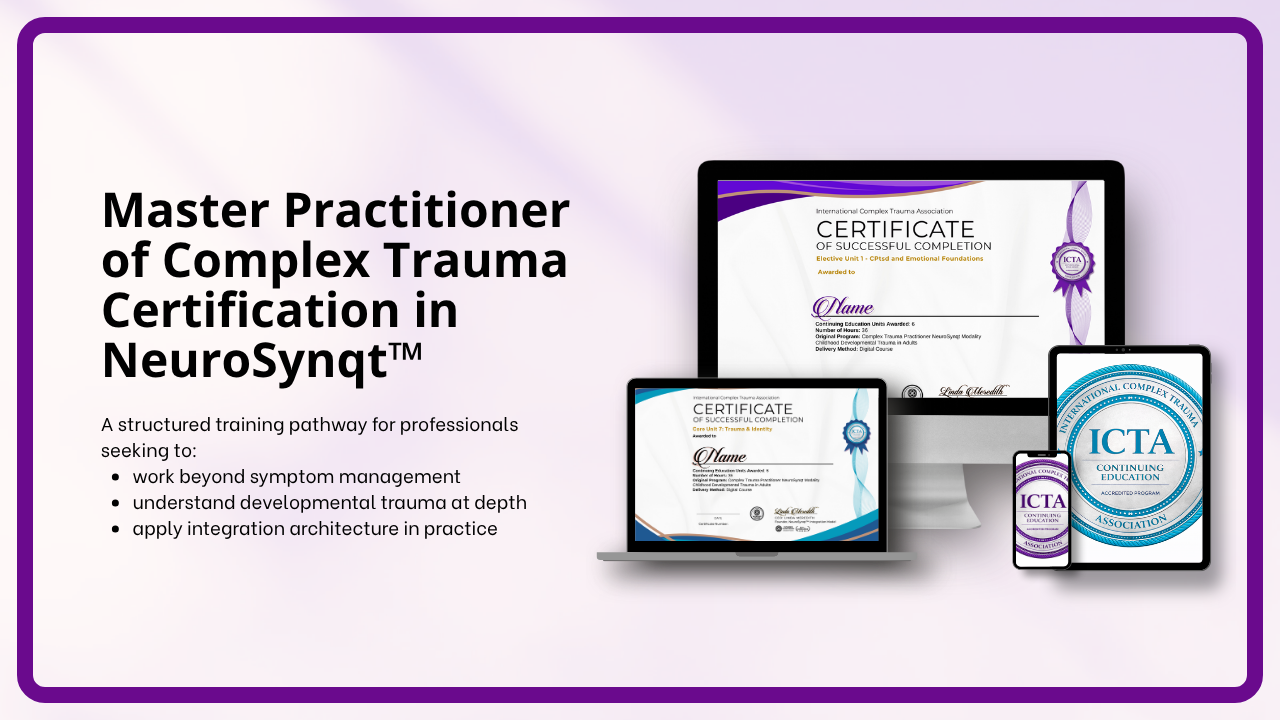
CEUs are available with individual courses and the CPtsd certification program.
Designed for professionals working with complex, non linear presentations.
Global Accreditation
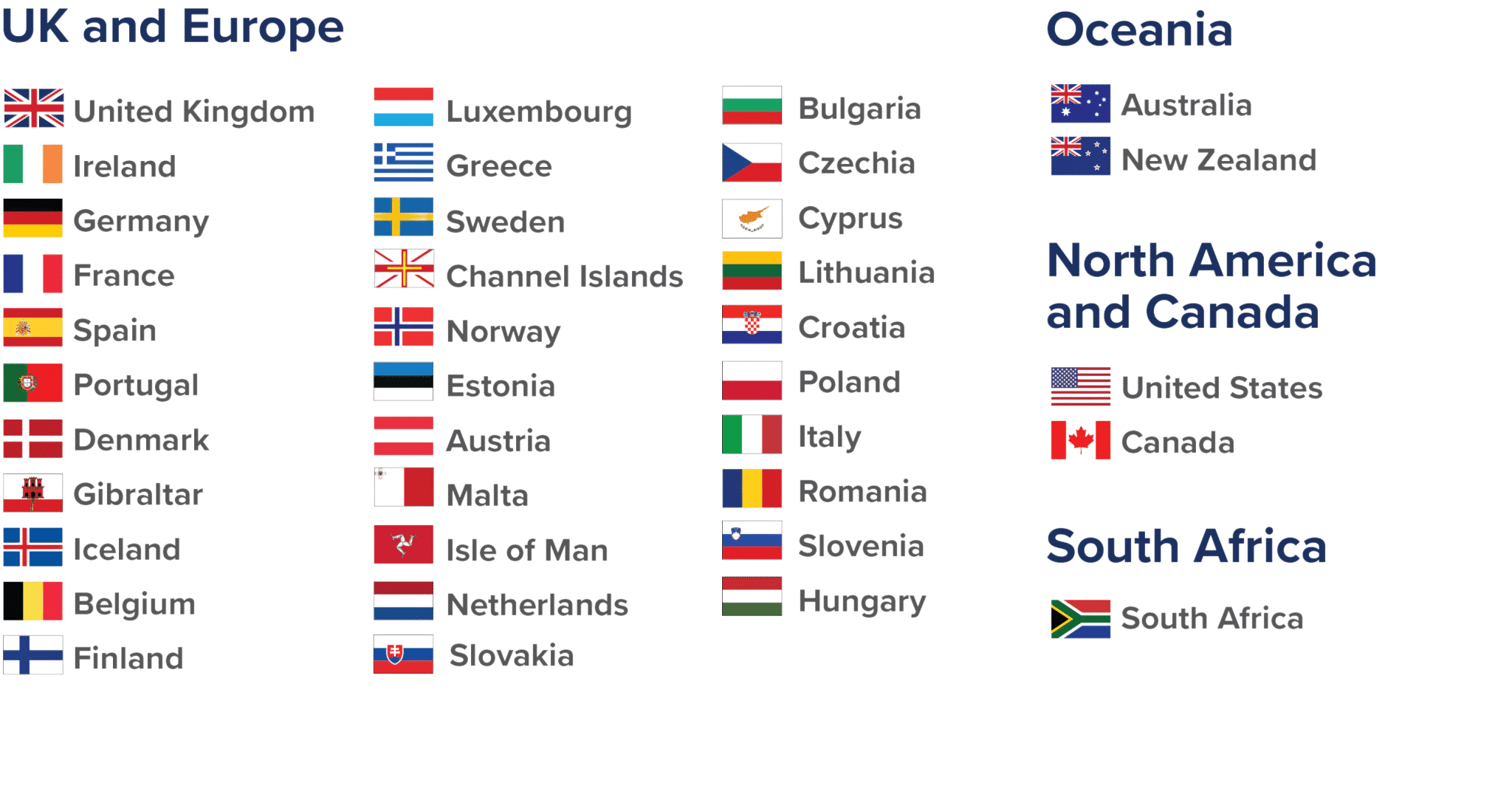
NeuroSynqt™ training is accredited through the International Institute for Complementary Therapists (IICT). NeuroSynqt™ training and courses have been peer reviewed at university level.
Supporting:
- professional recognition
- insurance eligibility
- global application across settings
Applicable across:
- clinical settings
- counselling and professional support settings
- coaching environments
- professional practice
Developed by Linda Meredith

Applied, not theoretical

Don't just take our word for it
Supporting integration that addresses intergenerational trauma at its source